3 sliding curved joints
Articulate
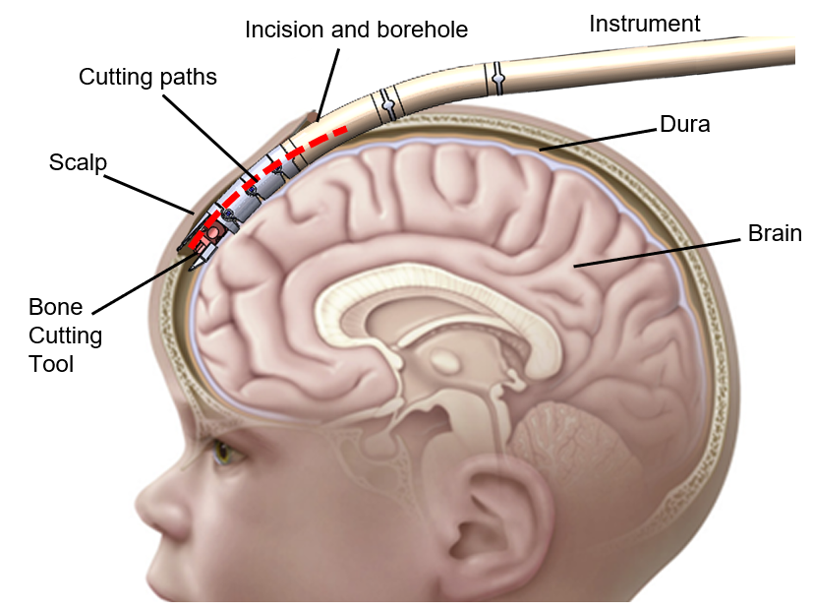
Follows the curved endoscopic path along the infant cranium.

Craniosynostosis · SickKids
The first articulating, robot-ready bone-cutting instrument for minimally invasive pediatric skull surgery.
Investigational device. Bench-stage prototype, not cleared for clinical use. Advancing toward FDA Class II 510(k).
Open surgery vs. Ossentra
The instrument
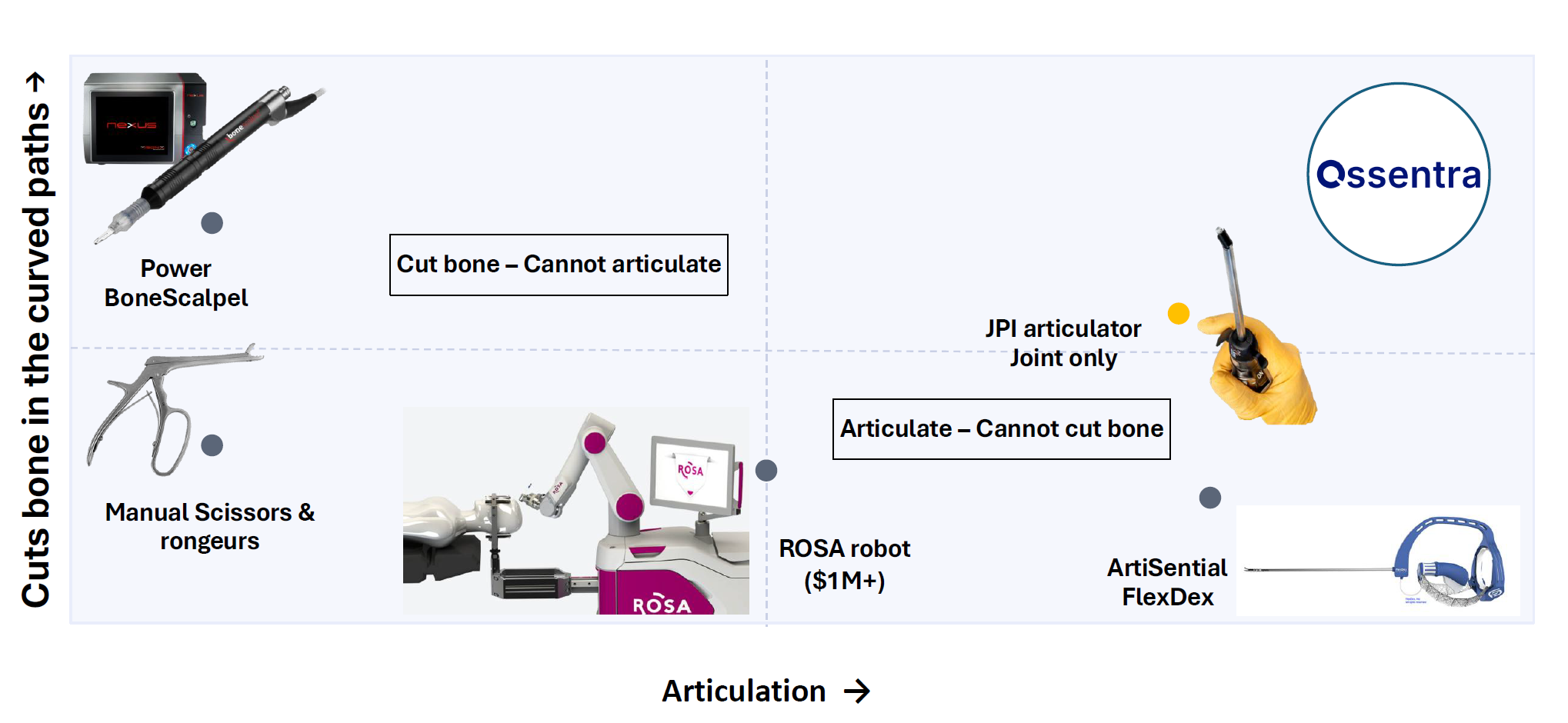
Tools that cut bone are rigid and straight. Tools that bend are made for soft tissue. No instrument has done both, until now.
3 sliding curved joints
Follows the curved endoscopic path along the infant cranium.
Punch · Burr · Ultrasonic
Interchangeable tips: bone punch, burr, ultrasonic cutter.
⌀ 13 mm shaft
Purpose-built for the 3–6-month infant skull.
Competition
Bone cutters are straight. Articulating tools are for soft tissue. The closest thing, JPI's bur, is built for adult joints. Ossentra is the only device that does all five.
Development status
Each stage gates the next. Nothing skipped, nothing finished early.
Cable-driven bending section, integrated end-effector, flexible endoscope. ASME J. Medical Devices, 2025.
Stiffness, cutting force, and workspace on CT-derived skull phantoms.
TIAP study of 10 US surgeons. Half would trial it, and articulation was the feature they valued most.
Adding the functions surgeons need for a real osteotomy: 12–18 months to 510(k) filing.
Osteotomies compared against open and endoscopic technique.
Predicate-based clearance; CE Mark and Health Canada filed in parallel.
Bench and cadaveric evaluation is open to craniofacial and pediatric neurosurgeons. Procurement and investor materials on request.